
A good roofing website does three jobs: it ranks on Google for the services and towns you want, it convinces a nervous homeowner that you're the safe choice, and it makes booking an inspection easy on a phone. That means a fast, mobile-first site with a separate page for each main service, a real page for each office location, your own job photos, reviews, license and insurance details, financing information and a phone number that's always one tap away. Looks matter less than speed, trust and clear pages.
Most roofing websites we audit look fine and do very little. They have one "Services" page that lists everything, a gallery of stock photos, a contact form at the bottom and nothing that tells Google which towns the company serves. This guide covers what a roofing website needs, page by page, with examples from our roofing clients. Traffic numbers come from SEO tools and Google Search Console, so read them as direction, not exact counts.
What should a roofing company website include?
At minimum: a clear homepage, one page per core service, a page for each real office location, proof (reviews, photos, credentials), financing details, an about page with real people, and easy ways to call, text or book. Everything else is extra.
- Homepage that says what you do, where, and why you're trustworthy, in the first screen on a phone.
- Service pages for roof replacement, roof repair, inspections, storm and hail damage, and each roof type you install.
- Location pages for each office and a few for the main towns you serve, each with real local content.
- Proof: Google reviews, project photos from your own jobs, manufacturer certifications you actually hold, license and insurance numbers.
- Financing page if you offer it, written in plain language.
- About page with the owner, the crews and the company's story.
- Contact options: tap-to-call, text, a short form and, if your team can handle it, online booking.
- Technical basics: fast loading, mobile layout, secure HTTPS, schema markup, and connection to Google Search Console and analytics.
What should a roofing homepage say?
Who you are, what you do, where you do it, and why a homeowner should trust you, all within a few seconds. A homeowner landing on your homepage is usually comparing you with two or three other roofers. They decide fast.
The strongest roofing homepages we've built or audited share a pattern:
- A plain headline naming the service and the area, like "Roof replacement and repair in [city] and [county]." Clever slogans lose to clarity.
- Proof near the top: star rating and review count, years in business, licenses, and certifications.
- A visible phone number that's tappable on mobile, and one clear next step.
- Services with short descriptions linking to their own pages.
- Areas served, linking to location pages.
- Real photos of your crews, trucks and finished roofs.
- Reviews, pulled from Google, with names and towns.
- How it works: inspection, estimate, install, cleanup, warranty.
- FAQs answering the questions your office hears every week.
In his live audit of an Omaha roofing company's SEO, Bodhi Gallo looks hard at the homepage and its calls to action, because that's where many homeowners make their first judgment. The video is a useful look at how we review a roofer's site and Google presence.

Why does each roofing service need its own page?
Because Google ranks pages, not websites. A homeowner searching "roof repair near me" wants a page about roof repair, and Google wants to show one. A single "Services" page that lists ten things in two sentences each rarely ranks for any of them.
Give each core service a page that fully answers the homeowner's questions:
| Page | What it should cover |
|---|---|
| Roof replacement | Signs you need one, materials you install, the process, timeline, warranty, financing, photos |
| Roof repair | Common problems (leaks, missing shingles, flashing), emergency service, when repair isn't enough |
| Roof inspection | What's checked, what the report includes, when to get one (buying a house, after a storm) |
| Storm and hail damage | What damage looks like, what to do first, how inspections work, how you work with homeowners on claims within your state's rules |
| Each roof type | Asphalt shingle, metal, tile, flat or low-slope: pros, cons, lifespan, what you install |
| Gutters, siding, windows | Only if you sell them, each on its own page |
| Commercial roofing | Systems, building types, maintenance programs, projects |
Write them for people, not for keywords. A page that answers real questions, shows your own work and makes the next step easy will rank and convert better than one stuffed with "best roofer in [city]" phrases.
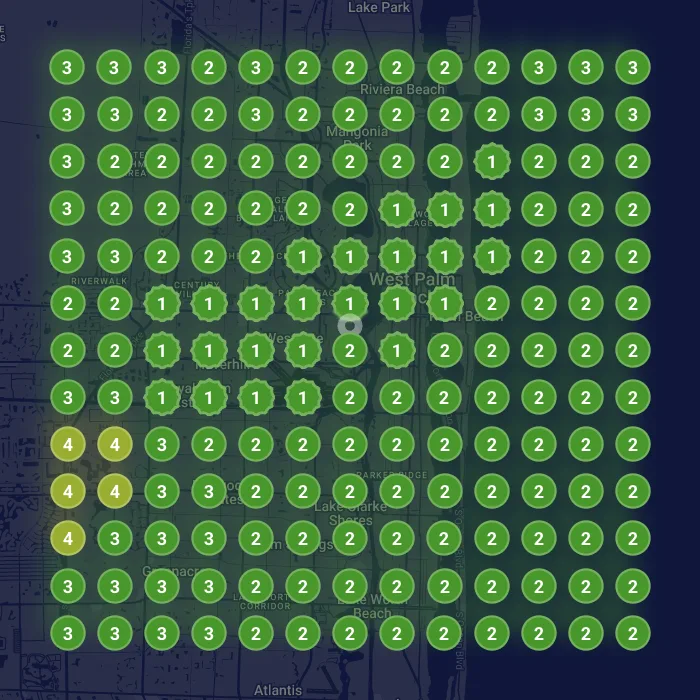
The page we built for Neal Roofing & Waterproofing in West Palm Beach in May 2025 shows what's possible. It went from zero to about 3,100 organic visits a month, according to SEO-tool estimates shown in Bodhi's audit video. Neal also produced 661 calls from its Google Business Profile from April to September 2026, ranking in the top three for 97% of its tracked map grid.
Should roofers build city and location pages?
Yes, but only good ones. A page for each office city is essential, because it supports the Google Business Profile for that location. Pages for other towns you serve can help you rank there too, as long as each one has real, useful local content. Dozens of copy-paste pages with only the town name swapped can hurt you.
Google's spam policies call these "doorway pages": many similar pages made to rank for specific searches that funnel users to the same place. Its documentation gives "multiple domain names or pages targeted at specific regions or cities that funnel users to one page" as an example. Thin, near-duplicate city pages are the classic roofing version.
A city page that earns its place includes things that are actually different for that town:
- Projects you've completed there, with photos and the neighborhood or street area.
- Reviews that mention jobs on streets in that town.
- Local roofing issues: weather, common home ages and styles, HOA rules, permit notes.
- Your office address and map if you have one there; your service area if you don't.
- How quickly you can get a crew there, and who covers that area.
Start with your office cities and the biggest towns around them. Add more as you build real project history there. Ten strong city pages beat a hundred thin ones.
Multi-location roofers need this most. Original Roofing Co. has profiles in Rochester Hills and Grand Rapids, Michigan, and Inverness, Illinois. All-Side Roofing & Restoration has three in the Dayton, Ohio area. Each profile needs a matching page on the website to rank well.
How fast does a roofing website need to be?
Fast enough to pass Google's Core Web Vitals on mobile. Most homeowners look for a roofer on their phone, often standing in a room with a leak. A slow, jumpy site loses them to the next result.
Google's Core Web Vitals give three targets for a good experience:
| Metric | What it measures | Good |
|---|---|---|
| Largest Contentful Paint (LCP) | Time until the biggest element, often the hero roof photo, loads | 2.5 seconds or less |
| Interaction to Next Paint (INP) | Delay between a tap and the page reacting | 200 milliseconds or less |
| Cumulative Layout Shift (CLS) | How much the layout jumps while loading | 0.1 or less |
You can test any page free with Google's PageSpeed Insights. The usual problems on roofing sites are huge uncompressed photos, auto-playing video headers, too many plugins, chat widgets and tracking scripts that load before the page, and sliders.
Fixes that help most:
- Compress and resize photos; use modern formats like WebP.
- Lazy-load images below the first screen.
- Replace auto-playing video backgrounds with a still image.
- Load chat and review widgets after the main content.
- Use good hosting and a content delivery network.
- Remove plugins and scripts you don't use.
Design for the phone first. Large tap targets, a sticky call button, short paragraphs, readable font sizes, and forms with as few fields as possible.
How do you turn website visitors into roof inspections?
Make it obvious and easy to contact you, give people several ways to do it, and remove reasons to hesitate. Most roofing sites lose leads not because of design, but because the phone number is hidden, the form is long, or nothing answers the homeowner's worries.
- Phone number in the header on every page, tappable on mobile.
- Short forms: name, phone, address and what's going on. Get roof age, insurance claim status and the rest by phone.
- Text option, since many homeowners prefer it.
- Online booking for inspections if your team can honor the slots.
- Clear next step on every page: "Book a free inspection" or similar, if that's what you offer.
- Answers to objections near the contact points: warranty, insurance, cleanup, timeline, financing.
- Thank-you page that says what happens next and when.
Track every call and form so you know which pages produce leads. Use call tracking that keeps your main number consistent on your Google Business Profile and directories; Google's guidance allows a tracking number as the primary number on a profile if your main number is listed as an additional one.
Get ahead of the next storm season. On a free growth call we check where you rank for “roofer near me,” how your site sells inspections, and where calls slip through.
Book a Growth CallWhat builds trust on a roofing website?
Proof that you're real, local, licensed, insured and good at the work. Homeowners have heard about roofing scams, and the FTC's consumer advice tells them to check licenses, get references and written estimates, and be wary of pressure. Your website should answer those checks before they're asked.
- Licenses and insurance: your state license number and proof of liability and workers' comp coverage.
- Manufacturer certifications you actually hold, with the program named correctly. Don't use a manufacturer's badge you haven't earned.
- Reviews from Google with names, towns and dates. Embed them or link to your profile.
- Your own photos: crews, trucks, the office and before-and-after jobs. Stock photos of smiling models make you look like everyone else.
- Warranty details: workmanship warranty and manufacturer warranties, in plain words.
- Owner and team: names and faces, years in the trade, how the company started.
- Memberships and local ties: trade associations, the local chamber, community work.
- Clear address and service area.
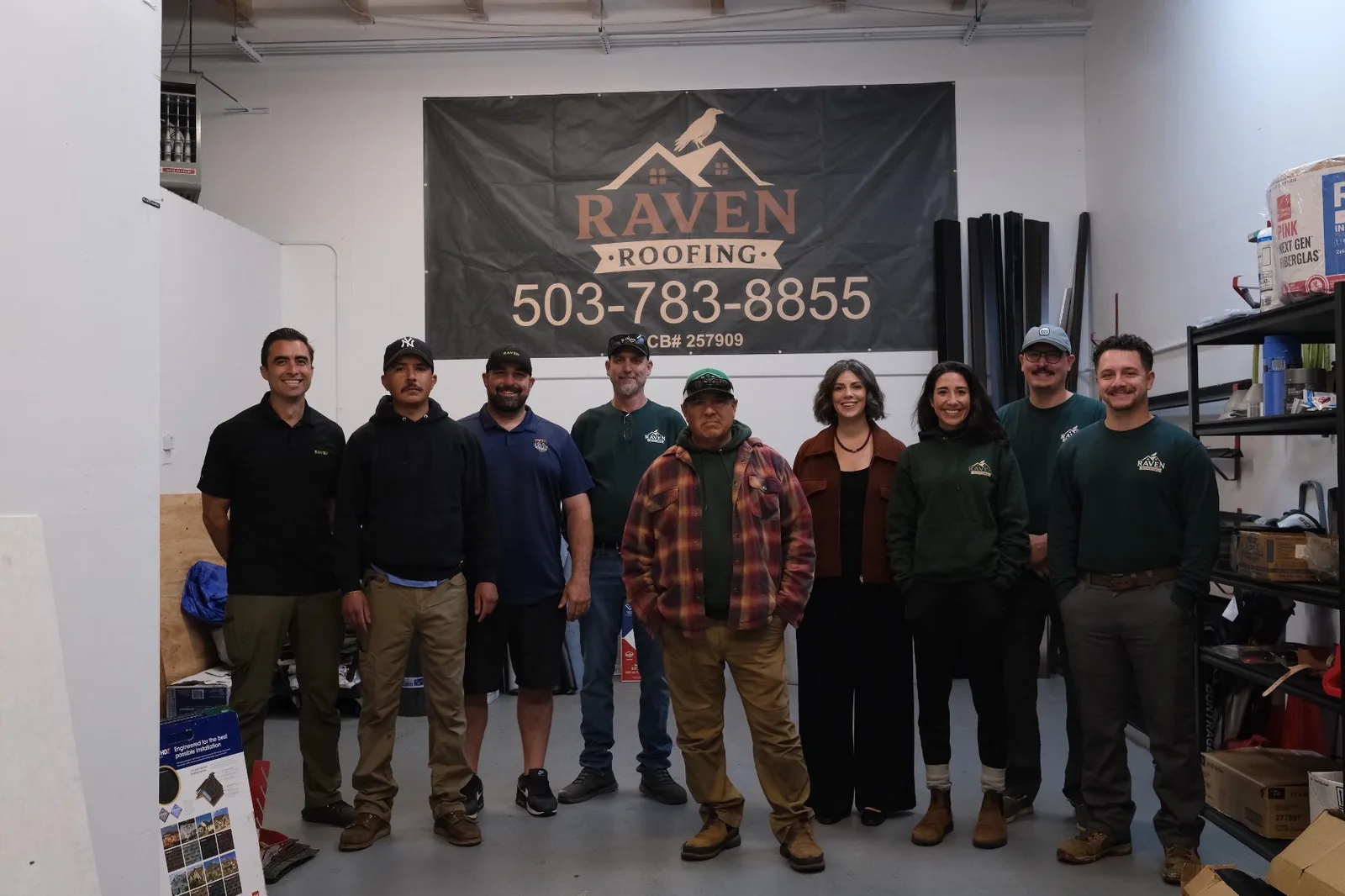
Our roofing clients who use real photos of their own people stand out. Dave Adams Roofing & Siding's branded trucks and Raven Roofing's team photos say more than any stock image could.
What photos and videos should a roofer put on the website?
Your own, as many as you can. Before-and-after shots of real jobs, crews at work, close-ups of damage you found, the finished roof from the street, and short videos of the owner or a project manager explaining something. Real images build trust and give Google fresh, original content.
Make photos a habit: have crews take a set on every job, from the same angles, with the homeowner's permission. Name files clearly and write alt text that describes the image. Group them by service and town so they can feed your service and city pages, and post the best ones on your Google Business Profile too.
Video is even more convincing. A two-minute walk-through of a replacement, an inspection explained on camera, or a customer telling their own story on video does more than paragraphs of text. Host videos on YouTube and embed them, so they can rank there too.
Tony Munoz of Martin Home Exteriors in Jacksonville talked on video about his first marketing investment, doubling his Google reviews and reaching the top three on Google Maps. Real customer stories like that are the kind of content homeowners trust.

Do roofers need financing and storm damage pages?
Usually, yes. A roof replacement is a large purchase, and many homeowners want to know about payment options before they call. Storm damage pages capture urgent searches after hail and wind events. Both need careful, honest wording.
A financing page should explain who your financing partner is, the general kinds of plans available, how to apply and that terms depend on approval. Don't advertise specific rates or "no payments" offers unless you include all the terms your lender and federal and state rules require.
A storm damage page should explain what damage looks like, what to do right away (safety, photos, tarping), how your inspection works and how you work with homeowners who file claims. Watch state rules here. Florida's statute 489.147, for example, restricts how contractors advertise around insurance claims: no offering gifts or incentives for an inspection or for filing a claim, no interpreting policies or advising on coverage without a public adjuster license, and required disclosures on certain ads. Violations can bring fines of up to $10,000 each. Other states have their own rules, so have someone check your storm pages.
Avoid promises like "free roof" or "we'll get your claim approved." They can break the law in some states and they make careful homeowners trust you less.
Should a roofing website have a blog?
Only if you'll write useful answers to questions homeowners actually ask. A blog full of short, generic posts written for keywords does little. A handful of strong guides that answer real questions can rank for years and feed AI answers too.
Good topics come from your own phones and estimates. Write down what homeowners ask every week:
- How long does a roof replacement take, and what happens on the day?
- Repair or replace: how do you decide?
- Metal versus shingle in your climate.
- What does hail or wind damage look like from the ground?
- What should I do if my roof leaks during a storm?
- How long do roofs last in your area, and why?
- What permits are needed in your county?
Answer each one directly in the first paragraph, add your own photos and examples, and link to the matching service page. Update the best ones every year instead of writing new thin posts.
Does accessibility matter for a roofing website?
Yes. Many homeowners who need a roofer are older, and some use screen readers, larger text or keyboard navigation. An accessible site is easier for everyone to use and tends to be cleaner for search engines too.
- Readable font sizes and strong contrast between text and background.
- Descriptive alt text on photos.
- Buttons and links that say what they do.
- Form fields with visible labels; placeholder text vanishes as people type.
- Pages that work when zoomed in and on small screens.
- Videos with captions.
Which structured data helps a roofing website, and is RoofingContractor the right type?
LocalBusiness markup with the RoofingContractor type, plus markup for your services, reviews where allowed, FAQs and videos. Schema helps Google and AI search tools understand who you are, where you are and what you do.
- RoofingContractor (a schema.org subtype of LocalBusiness) on the homepage and location pages, with name, address, phone, hours, geo coordinates, service area and links to your profiles.
- Service markup on service pages.
- FAQPage for real question-and-answer sections.
- VideoObject for embedded videos.
- BreadcrumbList on inner pages.
- Organization details, including your logo and social profiles.
Keep the business details in your schema identical to your Google Business Profile and directory listings. Test with Google's Rich Results Test. Google's local business structured data documentation lists the required and recommended properties.
How do you make a roofing website show up in AI search?
The same things that work for Google, done well: clear pages that answer questions directly, consistent business details everywhere, strong reviews and mentions on other sites. AI tools like ChatGPT, Google's AI Overviews and Perplexity pull from websites, reviews and directories to recommend roofers.
- Start each page with a direct answer to the question it targets.
- Use clear headings phrased like the questions homeowners ask.
- State facts plainly: services, towns, years in business, warranties, certifications.
- Keep your name, address and phone the same everywhere.
- Earn mentions on local news, associations and community sites.
- Keep getting reviews on Google and other platforms.
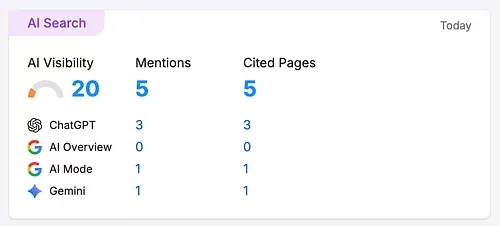
Pineapple Roofing is an example of measuring this. Its AI visibility score, from a tool that tracks how often AI answers mention a business, went from 0 to 20 after the work. It's an early metric and the tools are still young, but it shows that AI visibility can move. Our AI search guide goes deeper.
What results can a better roofing website bring?
More organic traffic, more calls and stronger map rankings, usually over months, not weeks. Here's what we've seen with roofing clients. These are SEO-tool estimates and Google Search Console data, specific to each client, and not a promise for anyone else.
| Client | Result |
|---|---|
| Neal Roofing & Waterproofing, West Palm Beach, FL ($1M to $50M in revenue in 5 years) | A new landing page went from zero to about 3,100 organic visits a month |
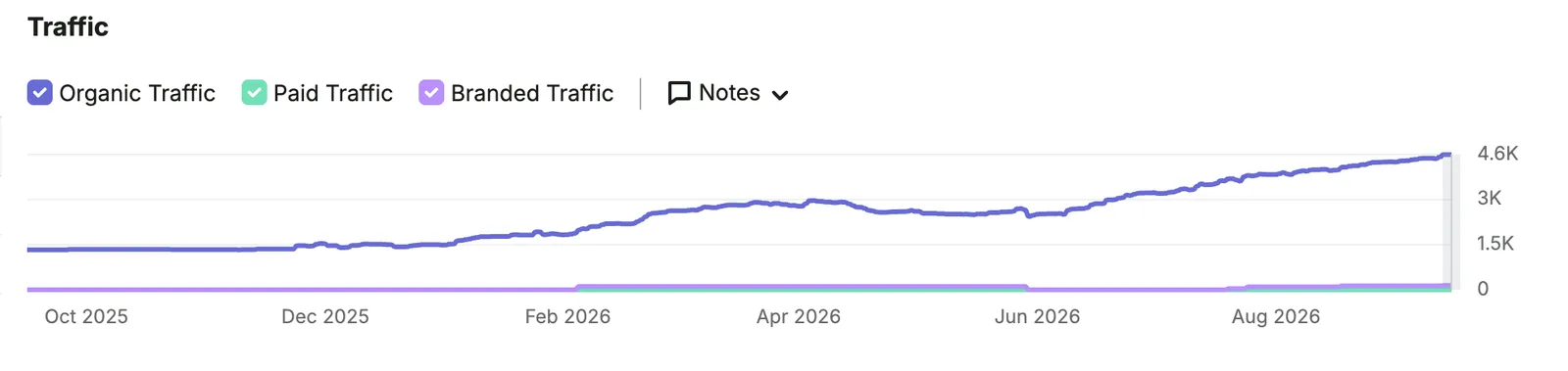
| All-Side Roofing & Restoration, Dayton, OH | Organic traffic from about 1,500 to 4,600 visits a month |
| Raven Roofing, Beaverton, OR | Organic traffic up 84% to about 2,300 visits a month |
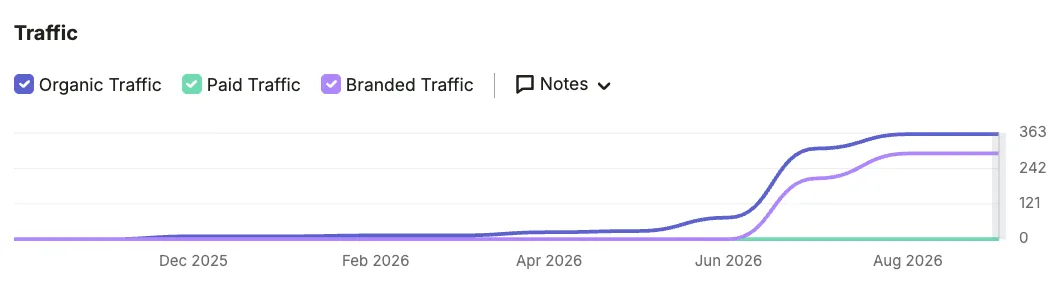
| Giant Roofing & Exteriors, Ada, MI | From near zero to about 363 visits a month; Search Console impressions for "roofing" up about 12x |
Giant's numbers are a good reminder that traffic isn't everything. 363 visits a month is modest, but Giant ranks 1.16 on average for "siding" and 1.37 for "roof repair" on the map grid. Its average for "roofing near me" is still 8.71, which is weak. A website supports map rankings; it doesn't replace the work on the Google profile and reviews. See our Google Maps guide for roofers.
How do you rebuild a roofing site and keep its rankings?
Keep the pages and content that already rank, map every old URL to its new one with 301 redirects, and check Search Console closely for weeks after launch. Most traffic losses after a redesign come from deleted pages, changed URLs without redirects, or stripped-out content.
- Export your current pages and their traffic from Google Search Console and analytics.
- Keep winning pages and their URLs where you can; improve them rather than rewriting from scratch.
- Redirect every changed URL to its closest new page with a 301 redirect.
- Keep titles, headings and content that rank, unless you're clearly improving them.
- Test on a staging site: speed, mobile, forms, call tracking, schema.
- Submit the new sitemap in Search Console after launch.
- Watch rankings and calls for at least a few weeks and fix problems fast.
Changing your company name or domain is a bigger move, because your Google Business Profile, reviews, directories and links all carry the old name. Tony Munoz discusses planning a rebrand in his video above. If you're rebranding, plan the profile, directory and website changes together.
Should a roofer use a website builder, a template or a custom site?
Any of them can work if the site is fast, has the right pages and you own it. What matters is the content, speed and structure, not the platform. The bigger risk is not owning your site.
| Option | Good for | Watch out for |
|---|---|---|
| DIY builder (Wix, Squarespace and similar) | New companies, small budgets | Speed limits, design that looks like everyone else's, your time |
| WordPress with a theme | Most roofers; flexible and widely supported | Plugin bloat, updates and security |
| Custom build | Multi-location and fast-growing companies | Cost, and dependence on the developer |
| Agency platform you rent | Getting started quickly | You may lose the site and content if you leave |
Whatever you choose, make sure your company owns the domain, the hosting account (or can move it), the content and the photos. Ask any agency, including us, what happens to the site if you stop working together. Our guide on how to choose a roofing marketing agency lists more questions to ask.
Should a roofing website have chat, online booking or an instant estimate?
Add them only if someone will answer fast and the numbers they show are honest. Each one can raise the share of visitors who reach out, but a chat nobody answers or a price tool that's far off your real estimates loses the homeowner you just earned.
| Tool | When it helps | What can go wrong |
|---|---|---|
| Live chat or text-to-chat | Homeowners who don't want to call, especially in the evening | Slow replies; bots that can't answer roofing questions |
| Online inspection booking | You have set inspection windows and a calendar the office keeps current | Double bookings; slots in areas you don't serve |
| Instant estimate tool | Replacement shoppers who want a ballpark before they talk to anyone | Ranges that don't match your estimates, which costs trust at the kitchen table |
| Short quote form | Always; name, phone, address and what's wrong is enough | Long forms with fields you don't need |
Whatever you add, track it as its own lead source, so you can tell after a few months whether it brought inspections or only more messages to answer. And keep the phone number visible on every page; most roofing homeowners with an active leak will still call.
What affects the cost of a roofing website?
The number of pages, how much original writing and photography is needed, custom design versus a template, integrations like booking and CRM, and ongoing hosting, updates and SEO. A five-page template site and a fifty-page multi-location site are very different projects.
When comparing quotes, compare what's actually included:
- How many service and location pages, and who writes them.
- Whether photos and video are included or you supply them.
- Speed and mobile targets, and whether they test against Core Web Vitals.
- Schema, analytics, Search Console and call tracking setup.
- Redirects and migration if you're replacing a site.
- Who owns the site, domain and content.
- Ongoing updates, security and support.
Also ask how the site will be measured after launch. A good partner reports calls, forms and booked inspections by page, not just traffic or rankings, and fixes the pages that underperform.
The cheapest site is expensive if it doesn't rank or convert. Judge a website on the inspections it books, the same way you'd judge any other marketing.
Roofing website checklist
Use this to review your current site or brief a new one.
- Check speed and mobile. Run your homepage and top service pages through PageSpeed Insights on mobile and fix the biggest problems.
- Map your pages. One page per core service and roof type, one per office city, and pages for the main towns where you have real projects.
- Rewrite the homepage. Plain headline with service and area, proof near the top, tappable phone, services and areas linked.
- Add proof. License and insurance details, real certifications, Google reviews and your own photos on every key page.
- Fix contact options. Phone in the header, short forms, text and booking, and a clear thank-you page.
- Add schema and tracking. RoofingContractor, Service, FAQ and Video markup, Search Console, analytics and call tracking.
- Check storm and financing pages. Make sure wording follows your state's rules and your lender's requirements.
- Connect to Google profiles. Link each Google Business Profile to its matching location page and keep details identical.
A website works best as part of the whole system. Read our roofing marketing guide for how it fits with Google Maps, reviews and ads, or our roofing SEO guide for the ranking side.
If you only have time for one thing this month, fix speed and the phone number on mobile. Then work down the list one page at a time. Small, steady improvements to a site that already ranks usually beat a full rebuild.
FAQ
How big should a roofing website be?
Enough to cover each core service, each roof type you install, each office city and the main towns where you have real projects, plus about, reviews, financing and contact. For most roofers that's 15 to 40 pages, built up over time.
Is a Google Business Profile enough for a roofer without a website?
Yes. The profile ranks better when it links to a strong, matching page, and the website is where homeowners check your work, reviews and credentials before calling.
What's the most important page on a roofing website?
The homepage and the roof replacement and roof repair pages usually get the most traffic and leads. Each office's location page matters most for map rankings.
Should I use stock photos on my roofing website?
Avoid them where you can. Photos of your own crews, trucks and finished jobs build more trust and give Google original content.
How long does it take a new roofing website to rank?
Usually several months, depending on competition and how much authority your domain already has. Pages can start showing for local and long-tail searches sooner.
Can I put city pages for every town I serve?
Only if each page has real local content, like projects, reviews and local details. Copy-paste pages with only the town name changed can be treated as doorway pages by Google.
Is RoofingContractor the right schema type for a roofer?
RoofingContractor, a LocalBusiness subtype, on the homepage and location pages, plus Service, FAQPage, VideoObject and BreadcrumbList where they fit.
Will redesigning my website hurt my rankings?
It can if URLs change without redirects or ranking content is removed. Keep winning pages, 301 redirect every changed URL and watch Search Console after launch.