
The best roofing leads come from homeowners who find you themselves: the Google map pack, your website, Local Services Ads and Google Search ads, plus referrals and neighbors of jobs you've done. Bought leads from lead marketplaces can fill a calendar quickly but are often sold to several roofers at once and close at lower rates. Door knocking works after storms if it's done legally. Whatever the source, the roofer who answers first, books an inspection on the call and follows up on every open estimate wins most of the jobs.
This guide compares every common roofing lead source, explains how to judge them on cost per signed job, and shows what our roofing clients' Google profiles produce in calls. The call numbers come from our 2026 roofing results deck and count calls made from the Google Business Profile itself, which undercounts total calls from Google. Results are specific to each client and don't predict for anyone else.
Where do roofing companies get leads?
From six places: Google (map pack, organic search, Local Services Ads, Search ads), lead marketplaces that sell leads, referrals and repeat customers, the neighborhoods around current jobs, door knocking and canvassing, and partners like realtors and home inspectors. Each one has a different cost, speed and close rate.
| Source | How it works | Speed | Typical lead quality | Who owns it |
|---|---|---|---|---|
| Google map pack | Homeowner calls from your Google profile | Months to build | High: they chose you | You |
| Website SEO | Homeowner finds your service or city page | Months to build | High | You |
| Local Services Ads | Pay per lead, top of search, Google Verified | Weeks | Medium to high | You, while you pay |
| Google Search ads | Pay per click on chosen searches | Days | Medium to high, depends on setup | You, while you pay |
| Lead marketplaces | Buy leads from a third-party site | Immediate | Mixed; often shared | The marketplace |
| Referrals and repeat | Past customers send friends | Ongoing | Very high | You |
| Neighbors of jobs | Signs, door hangers, letters near jobs | Ongoing | High | You |
| Door knocking | Reps canvass neighborhoods, often after storms | Immediate | Mixed; depends on the rep | You |
| Partners | Realtors, inspectors, property managers | Months to build | High | Shared |
The column that matters most is the last one. Leads you own, from your profile, site, reviews and referrals, keep coming without paying for each one and get stronger over time. Leads you rent stop when you stop paying. Most healthy roofing companies use rented leads to fill gaps while they build the owned ones.
How much of a roofer's lead flow can come from Google?
A lot, once the profile ranks. Our strongest roofing profiles produce more than 100 calls a month from the Google profile alone, before counting website forms, organic clicks and ads. That's why we start every roofing account with the Google Business Profile.
| Client | Market | Calls from Google profile | Period |
|---|---|---|---|
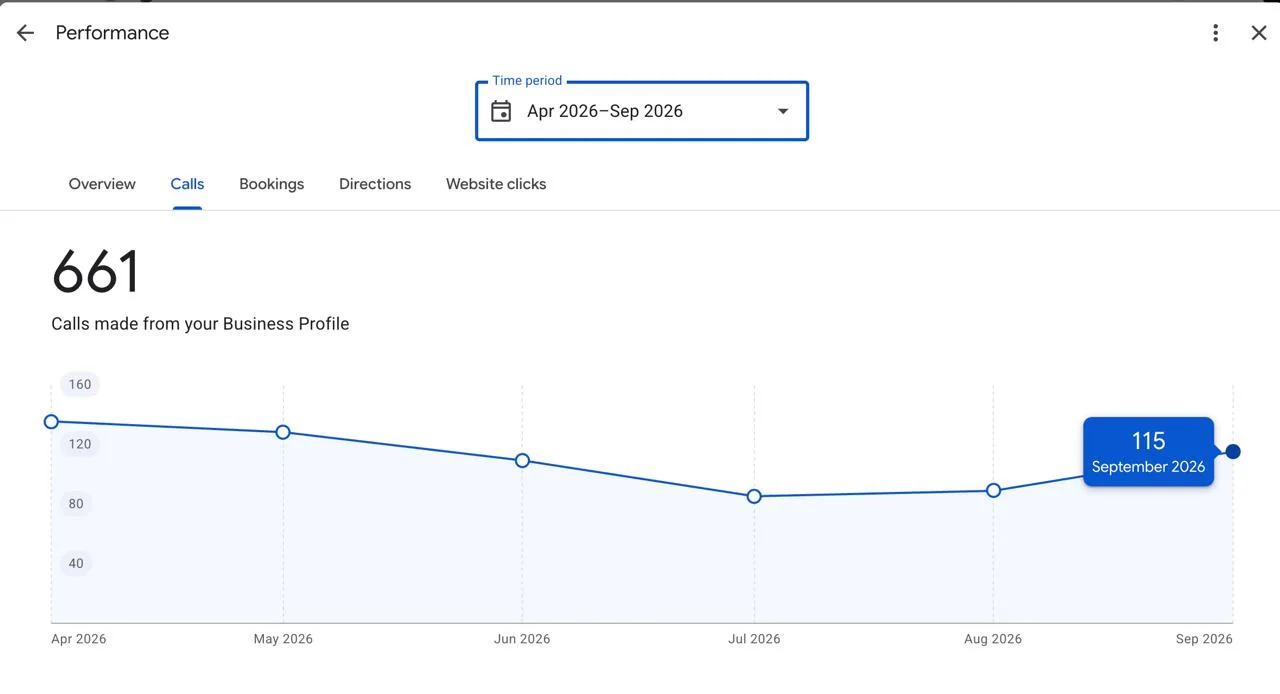
| Neal Roofing & Waterproofing | West Palm Beach, FL | 661 | Apr–Sep 2026 |
| Garabar Roofing | Lake Worth Beach, FL | 656 | Apr–Sep 2026 |
| Dave Adams Roofing & Siding | Cape May, NJ | 258, up 12.2% | May–Sep 2026 |
| Original Roofing Co. | MI and IL, 3 profiles | 249 | Jun–Sep 2026 |
| Emerald Roofing & Siding | Tarrytown & Rockland, NY | 228, up 16.3% | Apr–Aug 2026 |
| Charleston Roofs + Windows | Charleston, SC | 201 | Apr–Sep 2026 |
| Real Roofing | Chandler, AZ | 199, up 116.3% | Apr–Aug 2026 |
| Ridge Runner Roofing | Western NC, 3 profiles | 182 | Apr–Sep 2026 |
| All-Side Roofing & Restoration | Dayton area, OH, 3 profiles | 173 | May–Sep 2026 |
| Mighty Dog Roofing | Westford, MA | 168, up 24.4% | May–Sep 2026 |
| Gikas Roofing | Pearl River, NY | 166, up 84.4% | Apr–Aug 2026 |
| Surge Exteriors | Quincy & Macomb, IL | 114 | May–Sep 2026 |
| Raven Roofing | Beaverton & Oregon City, OR | 106 | May–Sep 2026 |
| Giant Roofing & Exteriors | Ada, MI | 76 | Apr–Aug 2026 |
| Bumble Roofing of Greater KC | Kansas City | 38, trending down | Jun–Sep 2026 |
Neal is also the clearest example of scale in our roofing client list: it grew from $1M to $50M in yearly revenue in 5 years. Steady lead flow from Google was one part of that, alongside the sales and operations team Sam Allsopp and Andrew Neal built.
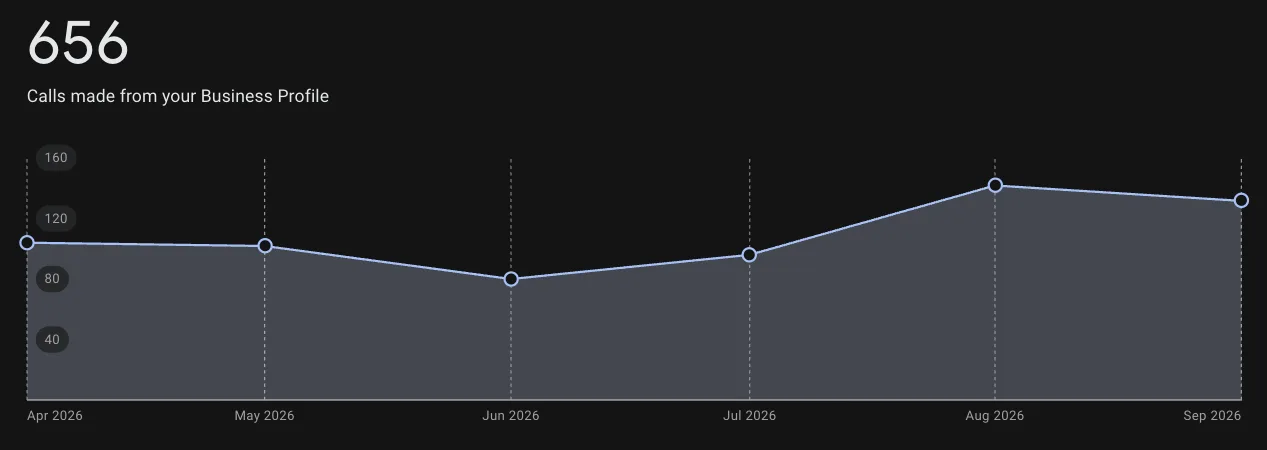
Here's what that looks like month by month for Garabar Roofing in Lake Worth Beach, Florida, which ranks first on the map for "roofer lake worth." Calls from its Google profile in 2026, read from the profile's own chart:
| Month (2026) | Apr | May | Jun | Jul | Aug | Sep | Total |
|---|---|---|---|---|---|---|---|
| Garabar profile calls | ~105 | ~103 | ~80 | ~96 | ~142 | ~130 | 656 |
Two things stand out. Even a top-ranked profile swings by more than 60 calls between its slowest and busiest months, so plan crews and follow-up for the peaks. And June, the dip, still produced about 80 calls, which is the floor that steady map rankings give you when the weather is quiet.
The bottom of that table matters as much as the top. Bumble Roofing's calls were falling over the summer, and Charleston Roofs + Windows produces about 34 calls a month from a market where its map rank is still weak. Google leads depend on ranking, and ranking depends on the work in our Google Maps guide and roofing SEO guide.
Are bought roofing leads worth it?
Sometimes, as a short-term filler. Lead marketplaces can send you homeowners within days, but many leads are sold to several roofers at once, so you're racing competitors for every one. Close rates tend to be lower, and you're building the marketplace's brand instead of yours. If you buy leads, buy only what you can call within minutes, and track every one to a signed job.
| Question to ask | Why it matters |
|---|---|
| Is each lead sold to one roofer or several? | Shared leads mean a race and lower close rates |
| How do they generate leads? | Search, forms, quizzes and incentives produce very different intent |
| What's the credit policy for bad leads? | Wrong numbers and out-of-area leads add up fast |
| Is there a minimum commitment? | Avoid getting locked into volume you can't serve |
| Can you choose job types and ZIP codes? | Repair and replacement leads aren't worth the same |
| What do they send with the lead? | Address, roof age and problem help you qualify fast |
Run the math the same way you would for ads: cost per lead divided by your close rate on those leads gives you cost per signed job. Compare that number honestly with Google. For most of our clients, once their profiles rank, bought leads become a small top-up rather than a core channel.
How do roofers get more referral and neighbor leads?
Ask for them at the moment the customer is happiest, make it easy to pass your name on, and market to the street around every job. Referral and neighbor leads are the cheapest and most trusting leads you get, and most roofers leave them to chance.
- Ask at the final walkthrough, the same moment you ask for a Google review. "Do you know anyone else on the street with an older roof?"
- Yard signs during and after the job, where local rules and the homeowner allow.
- Neighbor letters or door hangers on the streets around each job: "We just replaced the roof at [street]." In Florida, check Statute 489.147's rules if any of it mentions insurance claims.
- Every Door Direct Mail from USPS lets you reach every address on a carrier route around a job without a mailing list. See USPS EDDM.
- Thank-you notes for referrals. If you offer a referral reward, check your state's rules for insurance-paid work first, and never tie it to a review.
- A past-customer list you contact once or twice a year: maintenance reminders, gutter cleaning, storm checkups.
Does door knocking work for roofing leads?
It can, especially in the days after hail or wind, but it's also what homeowners are warned about. The FTC's guide on avoiding home improvement scams lists contractors who "knock on your door looking for business because they are 'in the area'" as a warning sign. If you canvass, do it in a way that makes you look like the opposite of a storm chaser.
- Get permits where your town requires them for door-to-door sales.
- Uniforms, ID badges and branded trucks. Homeowners will look you up while you're standing there.
- Lead with something useful: "We're doing a job on your street and noticed storm damage on a few roofs. Would you like a free inspection?" Never pressure.
- Follow the cancellation rules. The FTC's Cooling-Off Rule generally requires a three-day cancellation notice for sales made at the buyer's home, and some states, like Florida after a declared emergency, add more.
- Stay out of insurance advice unless you're licensed for it. Florida bans contractors from interpreting policies or adjusting claims without a public adjuster license.
- Back it up online. A homeowner who meets your rep will search your name. Strong reviews and a real website close the deal.
Which partners send roofing leads?
Realtors, home inspectors, property managers, insurance agents, gutter, solar and HVAC companies, and general contractors who don't roof. They see roofs that need work before the homeowner calls anyone. A handful of good partners can send steady, high-quality leads for years.
| Partner | What they need from you |
|---|---|
| Realtors | Fast inspections and clear reports for sales, quick repairs before closing |
| Home inspectors | A roofer they trust to follow up on what they flag |
| Property managers | Reliable response, clear pricing, invoices and photos |
| Insurance agents | Honest inspections and good documentation (keep it legal in your state) |
| Other trades | Referrals back, and a roofer who won't make them look bad |
Be careful with paid referral arrangements on insurance-funded work. Florida's statute bans compensation for referrals of services paid by property insurance. Other states have their own rules.
Get ahead of the next storm season. On a free growth call we check where you rank for “roofer near me,” how your site sells inspections, and where calls slip through.
Book a Growth CallWhy does speed matter so much for roofing leads?
Because homeowners contact more than one roofer, and the first to answer with a clear next step usually gets the inspection. That's true for every source on this page, and it's the cheapest improvement you can make. A lead you call back tomorrow has often already booked someone else.
Tony Munoz built Martin Home Exteriors in Jacksonville around a promise to call customers back within the hour. He says "the quickness in responding" is what customers notice, and his reviews back that up: they went from about 60 to about 160 in his first eight months with us.
- Calls: answered live during posted hours. Missed calls get a text within minutes.
- Forms: a call within the hour during business hours, and first thing the next morning otherwise.
- Bought leads: called within minutes, because other roofers are calling too.
- Messages: replied to fast, including Google profile and LSA messages.

How should roofers qualify leads?
Get the address, the problem, the roof's age, how urgent it is, and who decides. Five questions on the first call tell you whether to send an inspector today, next week or not at all. They also give your marketing team the data to see which sources bring the jobs you want.
| Question | What it tells you |
|---|---|
| What's the address? | Whether you serve it, and which crew or office |
| What's going on with the roof? | Repair, replacement, storm or inspection for a sale |
| How old is the roof? | Likely repair or likely replacement |
| How soon do you need someone? | Urgency and priority |
| Who else will be part of the decision? | Whether both decision makers can be at the estimate |
The Neal landing page in Bodhi's audit video does some of this before the call, with a short quiz. It's a good model for sites that get a lot of form leads.
How should roofers follow up on estimates?
On a schedule, and more than once. Replacement customers often take weeks to decide, and many estimates are lost not to a competitor but to silence. A simple follow-up sequence wins jobs you'd otherwise lose.
- Same day: send the estimate, itemized, with photos of what you found.
- Two days later: a call to answer questions.
- One week: a text with a relevant review or a photo of a similar finished roof.
- Two to three weeks: a call. Ask what's holding them back.
- Every few months: a check-in for open estimates, especially before storm season.
Itemized estimates help here too. Tony Munoz uses them, and homeowners comparing three roofers understand exactly what they'd be paying for.
How do you compare roofing lead sources fairly?
By cost per signed job, not cost per lead. A cheap lead that never closes is expensive, and a pricey lead that closes half the time can be the best deal you have. Work it out for every source with the same three numbers: what you spent, how many leads you got, and how many became signed jobs.
Our results deck doesn't include ad spend, cost per lead or close rates for any client, so we can't show you a real cost per signed job. What follows is example math worked from ranges. The ranges are illustrative round numbers, not our prices, quotes from any vendor or any client's real costs. Put your own numbers in.
| Example source | Cost per lead (example range) | Close rate (example range) | Cost per signed job |
|---|---|---|---|
| Shared leads you buy | $40–$80 | 3–8% | $500–$2,670 |
| Search ads | $80–$200 | 15–25% | $320–$1,330 |
| Calls from your Google profile | $50–$150 (monthly SEO cost ÷ calls) | 25–40% | $125–$600 |
The formula is the same on every row: cost per lead divided by close rate. The best case is the cheapest lead at the best close rate ($40 ÷ 8% = $500); the worst case is the priciest lead at the worst close rate ($80 ÷ 3% ≈ $2,670). Notice how wide each range is. A source that looks cheap per lead can end up the most expensive per job if few of those leads close, and shared leads are often sold to several roofers at once, which pushes close rates down. That's why you track your own close rate by source instead of trusting anyone's averages, including these.
One more adjustment: owned sources get cheaper over time. The SEO work behind your Google profile keeps producing calls next year, while money spent on bought leads is gone once the leads are delivered. Compare sources over a year, not a month.
What do published benchmarks say?
Outside estimates vary a lot, which is the point. Zuper's 2026 roofing lead channel table, compiled from several industry sources, puts lead aggregators like Angi and HomeAdvisor at about $40 to $110 a lead with 5 to 15% close rates, Local Services Ads at about $45 to $162 with 25 to 35%, and Google Search ads at about $150 to $200 with 20 to 40%. Those are third-party averages, not our data, and roofers in the same city can land far outside them. Use them to sanity-check your own numbers, not to replace them. Any agency you hire should report these numbers by source; see how to choose a roofing marketing agency.
How are retail and insurance roofing leads different?
Retail leads come from homeowners paying for a repair or replacement themselves. Insurance leads come from storm or hail damage that might be covered by a claim. They come from different searches, need different follow-up and carry different legal risks, so track them separately.
| Retail | Insurance and storm | |
|---|---|---|
| Trigger | Old roof, leak, selling the house, wanting a better roof | Hail, wind, hurricane, fallen tree |
| Typical searches | roof replacement [city], roof repair, metal roof | storm damage roof, hail damage inspection |
| Decision time | Weeks, with several estimates | Fast after the event, then slow during the claim |
| What wins | Reviews, itemized estimates, financing, warranty | Speed, a clear inspection report, local trust |
| Legal care | Standard written agreement and cancellation rules | State rules on claim advertising and adjusting |
Insurance leads spike and fade with the weather. Retail leads are steadier. Companies that build retail demand through SEO and reviews don't have to chase every storm to stay busy.
Do Facebook, Nextdoor and social media bring roofing leads?
Some, mostly as support for the channels above. Homeowners ask neighbors for roofer recommendations on Nextdoor and local Facebook groups, and a company with a real presence and happy customers gets named. Paid social can reach people before they search, but it usually brings colder leads than Google.
- Claim your Nextdoor business page and keep it current. Recommendations there come from neighbors.
- Post real projects on Facebook and Instagram with the town named: before and after, crew at work, the finished roof.
- Short video from the job site works well. Owners explaining what they found on an inspection build trust.
- Paid social for remarketing to past site visitors and for financing offers, judged on signed jobs.
- Answer messages fast. A Facebook message is a lead like any other.
Mentions in places where people ask for recommendations, like Nextdoor threads and local forums, can also show up in AI answers. They're worth earning with good work, never faking.
Are home shows and local events worth it for roofers?
They can be, if you collect contact details and follow up. A booth at a home show or a sponsorship at a local event puts your name in front of homeowners who are thinking about projects. Most of the value comes after: calling everyone who stopped by within a few days and offering an inspection.
The same goes for community sponsorships, like youth teams, charity events and school fundraisers. They rarely bring leads directly, but they earn local links and mentions that help your Google rankings, and they make your name familiar when the homeowner does search.
How can roofers get leads from past customers and old estimates?
Contact them. Your list of past customers and unsold estimates is the cheapest source of leads you have, and most roofers never touch it. A short message once or twice a year brings back repairs, gutters, referrals and replacements that were put off.
- Before storm season: "Want us to check your roof before [hurricane or hail] season?"
- After a storm: a message to past customers in the hit area, offering an inspection.
- Old estimates: a check-in every few months. Circumstances change, and you've already done the hard part.
- Anniversaries: a one-year checkup on a new roof, which is also a natural time to ask for a referral.
- Other services: gutters, siding, skylights or windows if you offer them.
How does roofing lead flow change by season?
In most of the country, leads rise in spring, peak in summer and early fall, and slow in winter, with spikes after storms. Florida and the Gulf Coast follow hurricane season. Northern markets see winter calls for ice dams and wind damage. Plan your spending and your staffing around your own calendar.
Use your own past years to plan: more ad budget and phone coverage in the peak months, and steady SEO and review work all year so the peak months are bigger. Your Google Business Profile performance report shows calls by month, which is the easiest place to see your own pattern.
How do commercial roofers get leads?
Mostly through relationships and search, not mass advertising. Commercial roofing buyers are property managers, facility directors, building owners and general contractors. They search for the specific roof type and service, then check your experience, insurance and safety record before calling.
- Separate service pages for TPO, EPDM, modified bitumen, metal, coatings and maintenance programs.
- Project pages with building type, size, system and photos.
- A maintenance program page, since repeat inspection work leads to replacements later.
- Relationships with property management firms and general contractors, which no ad replaces.
- LinkedIn for reaching facility and property managers.
Commercial searches have far less volume than residential ones, so rankings for a few precise terms matter more than traffic.
What are the most common lead-handling mistakes roofers make?
Missed calls, slow callbacks and no follow-up after the estimate. These cost more jobs than any marketing problem, because the money to get the lead is already spent.
- Calls going to voicemail during the day while everyone is on roofs.
- Web forms answered the next day. By then the homeowner has booked someone else.
- No second contact after the estimate. Many jobs close on the third or fourth touch.
- No record of the source. Without it you can't tell which marketing works.
- Disputing nothing. Local Services Ads let you dispute leads that aren't valid; many roofers never do.
- Not asking for a review after a finished job, which makes the next lead harder to win.
Fixing these usually adds signed jobs without adding a dollar of ad spend. Record a sample of calls and listen to them; most owners are surprised by what they hear.
Which referral partners send roofers the best leads?
Real estate agents, home inspectors, property managers, and other trades like gutter, siding, solar and HVAC companies. They see roofs that need work every week, and homeowners trust their recommendations. A handful of active partners can send steady jobs at no ad cost.
- Real estate agents need fast roof inspections and certifications before closings.
- Home inspectors flag roof problems in nearly every report on an older house.
- Property managers handle repairs on many homes and buildings at once.
- Solar installers often need a roof replaced or repaired before they can install panels.
- Other trades who work on the home and get asked, "Do you know a good roofer?"
Make it easy for them: answer their calls fast, send photos and a short report, and tell them how the job turned out. Thank-you gifts or payments for referrals can be restricted in some situations, especially when insurance pays for the work, so check your state's rules before offering anything.
Keep a simple list of who referred each job. Once a year, look at which partners actually sent signed work and spend your time on them.
How do roofers track which lead sources work?
Tag every lead with its source the moment it arrives, keep that tag through inspection, estimate and signed job, and review cost per signed job by source every month. Tracked phone numbers, form tracking and a CRM make this automatic. Vish Mazumder at Mighty Dog Roofing calls not knowing where your jobs come from "a you problem," meaning it's the owner's job to set up.
| Step | Tool |
|---|---|
| Know which number they called | Call tracking numbers for the profile, site, ads and print |
| Know which page they filled in | Form tracking in analytics and Google Ads |
| Keep the source with the customer | Your CRM, with a required lead source field |
| See what it turned into | Inspection, estimate and signed job stages in the CRM |
| Compare sources | A monthly report: spend, leads, signed jobs and revenue by source |

Which lead sources fit which roofing company?
Smaller companies should lean on the Google profile, reviews, referrals and a modest Search ads budget. Growing companies add LSA, SEO for every service and town, and partner programs. Multi-location companies add a real profile for each office and a central team that answers every call.
| Stage | Core sources | Add when ready |
|---|---|---|
| New or one crew | Google profile, reviews, referrals, yard signs | Search ads for repair in your town |
| Growing, several crews | Profile, SEO pages, LSA, Search ads | Partner programs, neighbor mail |
| Multi-location | A profile per real office, SEO for every town, LSA by location | Central call team, remarketing, video |
Growth also has to match what your crews can install. Vish's rule at Mighty Dog is to set each job correctly, sell it correctly and install it correctly. More leads than your team can handle well turns into bad reviews, which costs you leads later.
A 60-day roofing lead generation plan
- Set up tracking. Tracked numbers, form tracking and a CRM source field on every lead.
- Fix the Google Business Profile. Category, services, photos and a link to the right page.
- Start reviews and referrals. Ask at every final walkthrough.
- Turn on LSA and Search ads. Repair and replacement separate, with real landing pages.
- Market around every job. Signs, neighbor letters and mail on nearby streets.
- Tighten the phones. Live answers, fast callbacks and a follow-up schedule for estimates.
- Compare sources. Cost per signed job by source after 60 days. Cut the worst, add to the best.
For more ideas by season, see our roofing marketing ideas. For the full system, start with the roofing marketing guide.
FAQ
What is the best lead source for roofers?
For most residential roofers, the Google map pack: homeowners who call from your Google Business Profile chose you, cost nothing per call, and keep coming as long as you rank. Referrals and neighbors of past jobs are close behind.
Are bought roofing leads worth it?
Sometimes, as a short-term filler. Many are sold to several roofers at once, so close rates are lower and speed decides who wins. Track each one to a signed job and compare that cost with your other sources.
How do roofers get leads without paying for them?
Rank your Google Business Profile, build service and city pages on your website, ask every customer for a review and a referral, and market to the streets around every job with signs and neighbor letters.
Does door knocking still work for roofers?
It can, especially after storms, but homeowners are warned about it. Get permits, wear uniforms and ID, never pressure, follow the FTC Cooling-Off Rule and stay out of insurance advice unless you're licensed.
How quickly should a roofer call back a new lead?
As fast as possible. Answer calls live, text missed calls within minutes and call form leads within the hour. Homeowners contact several roofers, and the first good response usually wins.
How do I know which roofing leads are profitable?
Tag every lead with its source, keep the tag through inspection, estimate and signed job in your CRM, and compare cost per signed job by source every month.
Can I pay realtors or insurance agents for referrals?
Check your state's law first. Florida, for example, bans compensation for referrals of services paid by property insurance. Many states have rules on referral payments.
How many calls can a Google Business Profile bring a roofer?
It depends on rank and market. Our strongest roofing profiles produced about 110 calls a month from the profile alone in 2026, while newer profiles produced a handful.
Should a roofing company use Angi, Thumbtack or HomeAdvisor?
They can fill gaps, especially for new companies, but they build the platform's brand, not yours. Use them while your own Google profile and website grow, and judge them on signed jobs.
What should a roofer ask on the first call?
The address, what's going on with the roof, its age, how soon they need someone and who else is part of the decision. Then book an inspection on that call.