
The roofing marketing ideas that pay off most are the unglamorous ones: rank your Google Business Profile in the map pack, get a steady flow of honest reviews, build a page for each service and office city, run Local Services Ads and tightly targeted Search ads, and market to the neighbors around every job. After that come referral partners, follow-up with old estimates, video, yard signs, truck wraps and community work. Pick a few, do them well every month and track which ones bring signed jobs.
Lists of "101 roofing marketing ideas" are easy to find and hard to use. This one is shorter and ranked by what actually moves calls for the roofing companies we work with. Each idea includes how to do it, what it costs in time or money, and how to measure it. Where we have real client results, we include them; the call numbers come from our 2026 roofing results deck and count calls from the Google Business Profile itself. Results are specific to each client and don't predict for anyone else.
What are the best marketing ideas for roofing companies?
Ranking your Google Business Profile, building a steady review habit, giving every service and office city its own page, and answering every call fast. Those four bring most of the calls for most residential roofers; the rest of the list adds to them. The ideas below are grouped by how much they usually matter. Start at the top. Most roofers get more from doing the first five well than from adding twenty new tactics.
| Idea | Effort | Speed | Impact |
|---|---|---|---|
| Rank on Google Maps | High, ongoing | Months | Very high |
| Review system | Low once set up | Weeks | Very high |
| Service and city pages | Medium | Months | High |
| Local Services Ads | Medium setup | Weeks | High |
| Google Search ads | Medium, ongoing | Days | High if well run |
| Neighbor marketing around jobs | Low | Immediate | Medium to high |
| Past customers and old estimates | Low | Immediate | Medium to high |
| Referral partners | Medium | Months | Medium to high |
| Video and social | Medium | Months | Medium |
| Yard signs, wraps, uniforms | Low | Ongoing | Medium |
| Direct mail | Medium | Weeks | Varies |
| Community sponsorships | Low to medium | Slow | Brand and links |
1. Rank your Google Business Profile in the map pack
This is the single biggest source of calls for most residential roofers. Homeowners searching "roofer near me" or "roof repair" see three businesses in the map pack before anything else, and the calls those businesses get cost nothing per call.
The work: the right primary category ("Roofing contractor"), complete services and service areas, real photos added regularly, a matching location page on your website, consistent details across directories, and a steady flow of reviews. A map grid tool shows where you rank across your area, not just at your office.
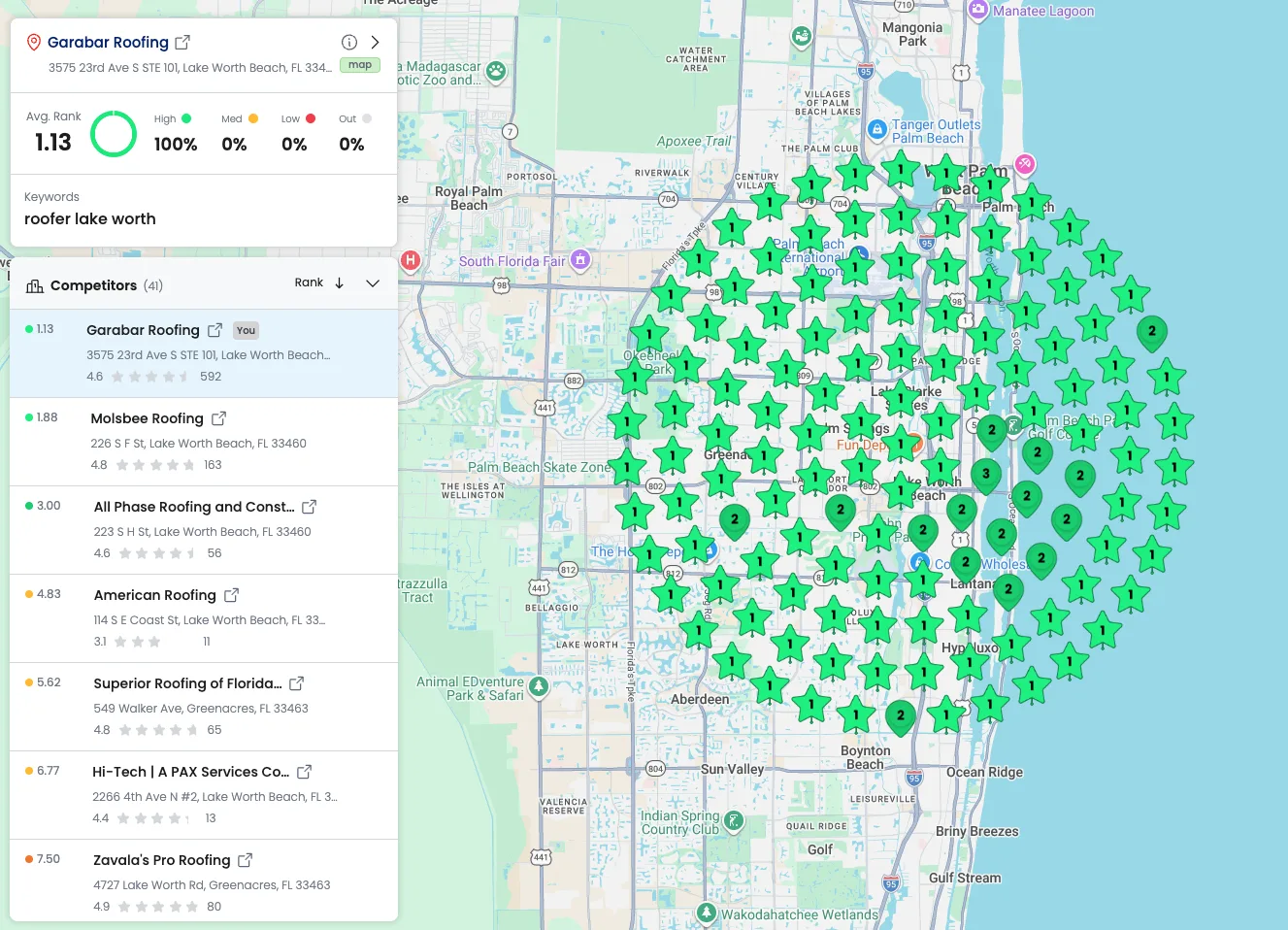
What it produced for our roofing clients from April to September 2026: Neal Roofing & Waterproofing in West Palm Beach, 661 calls from its profile with top-three rankings across 97% of its grid; Garabar Roofing in Florida, 656 calls with average ranks of 1.13 and 1.66 on its tracked keywords. Our full Google Maps guide for roofers covers the method.
2. Build a review system, not a review push
Reviews affect where you rank on Maps and whether a homeowner calls you once they see you. The roofers who win ask every finished customer, every time, in a simple, repeatable way. Our best-performing clients get 25 new reviews/month.
- Ask on the last day of the job, in person, when the customer is happiest.
- Follow up the same day by text with a direct link to your Google review form.
- Send a reminder a few days later if they haven't left one.
- Reply to every review, good or bad, within a few days.
- Track reviews by crew or sales rep so you can see who asks.
Keep it honest. The FTC's rule on fake reviews bans buying reviews, writing fake ones and offering incentives tied to positive reviews, and Google removes reviews it believes are fake. Don't tell customers what to write; just ask them to share their experience. Don't filter so only happy customers get the link.
Tony Munoz of Martin Home Exteriors in Jacksonville said on video that he doubled his Google reviews after starting with us, and moved into the top three on Google Maps.

3. Build a page for each service and each office city
Google ranks pages, so give it one for each thing you want to rank for: roof replacement, roof repair, inspections, storm damage, each roof type you install, and each office city. Each page should answer the homeowner's real questions, show your own photos and link to the matching Google profile.
Add pages for nearby towns only when you can make each one genuinely local, with projects, reviews and details for that town. Google treats near-duplicate city pages as doorway pages. Our roofing website design guide goes page by page.
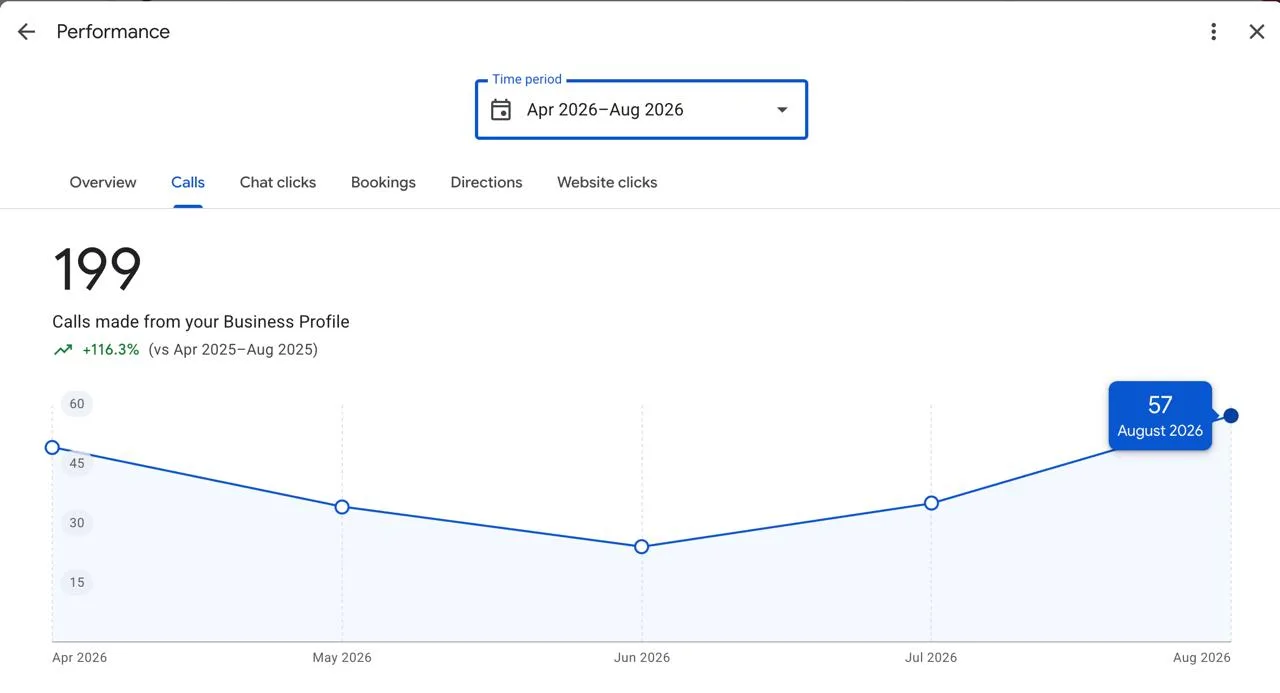
Real Roofing's calls from Google rose 116.3% to 199 from April to August 2026, with an average map rank of 2.35. All-Side Roofing & Restoration's organic traffic grew from about 1,500 to 4,600 visits a month by SEO-tool estimates. Both came from steady page, profile and review work, not one big trick.
4. Run Local Services Ads
Local Services Ads appear above everything else for many roofing searches, carry the Google Verified badge and charge per lead, not per click. They're one of the fastest ways to add calls once you pass Google's checks on your license, insurance and business.
Plan for the change Google announced for 2026: Local Services Ads are moving into Google Ads, and roofing is in the first phase starting in August 2026. Budgets become weekly, manual bidding goes away, and old reports don't carry over, so export them. Google Verified status carries over. Our Google Ads and LSA guide covers the details.
Dispute leads that aren't valid, such as job seekers, wrong services or areas you don't serve; Google allows credits for some lead types. Answer every call live, because responsiveness affects how often your ads show.
5. Run tight Google Search ads
Search ads let you choose exactly which searches you pay for, which makes them great for high-value jobs like roof replacement and for filling gaps in areas where you don't rank yet. They also waste money fast if they're set up loosely.
- Separate campaigns or ad groups for repair, replacement, storm damage and commercial.
- Negative keywords for jobs, DIY, materials shopping, "cheap" and services you don't offer.
- Send each ad to a matching page, not your homepage.
- Track calls and forms as conversions, and import signed jobs if you can.
- Limit the area to where you want to work.
Judge them on cost per signed job, not clicks or even leads.
Get ahead of the next storm season. On a free growth call we check where you rank for “roofer near me,” how your site sells inspections, and where calls slip through.
Book a Growth Call6. Market to the neighbors around every job
Every roof you install is an advertisement on the street. Neighbors see the trucks and the dumpster, and many of their roofs are the same age. Turn that attention into leads.
- Yard signs during and after the job, with the homeowner's permission.
- Door hangers or letters to nearby homes: "We're replacing the roof at [street]. Want a free look at yours while we're here?" Use only offers you really make.
- Every Door Direct Mail from USPS lets you mail every address on chosen carrier routes without buying a list.
- Before-and-after posts on your Google profile and social, naming the neighborhood.
- Neat job sites. A clean, safe site with polite crews sells the next job on the street.
After storms, neighborhoods with damage are where you'll see demand. Be careful in states with strict rules on storm solicitation, and never offer gifts or incentives for inspections or insurance claims where that's banned, as Florida's statute 489.147 does.
7. Stay in touch with past customers and old estimates
Your list of past customers and unsold estimates is the cheapest marketing you have. Most roofers never contact either list again.
- A pre-season message: "Want us to check your roof before storm season?"
- A check-in on old estimates every few months.
- A one-year checkup on new roofs, which is also a natural time to ask for a referral.
- Messages after a storm to past customers in the affected area.
- Offers for gutters, siding or windows if you sell them.
Use texts and email, keep it short, and make it easy to reply or book.
8. Build referral partnerships
Real estate agents, home inspectors, property managers, insurance agents and other trades all meet homeowners who need a roofer. A handful of partners who trust you can send steady work.
Make it easy: answer their calls quickly, send photos and short reports, give realtors fast inspections before closings, and tell partners how each referral turned out. Before offering any payment or gift for referrals, check your state's rules. Florida, for example, bans compensation for referrals of work paid by property insurance.
9. Use video to build trust
Video lets homeowners see who you are before you show up. It doesn't need to be polished. A phone, good light and a clear explanation are enough.
- The owner introducing the company and how you work.
- Short explainers: what hail damage looks like, repair versus replace, metal versus shingle.
- Job walk-throughs from tear-off to finished roof.
- Customer stories, recorded with permission and in their own words.
- Answers to the questions your office hears every week.
Post them on YouTube, embed them on matching pages, and share clips on your Google profile and social channels.
Vish Mazumder runs a Mighty Dog Roofing franchise north of Boston. In a video with Bodhi Gallo, he talks about growing the franchise responsibly and working with us. From May to September 2026, his location's Google profile produced 168 calls, up 24.4%.

10. Use social media for proof and remarketing
Social media rarely brings as many direct roofing leads as Google, but it supports everything else. Homeowners check your Facebook or Instagram to see if you're real and active, and neighbors recommend roofers in Facebook groups and on Nextdoor.
- Post finished jobs, crews at work and short videos, naming the town.
- Claim your Nextdoor business page and keep it current.
- Answer messages and comments fast; they're leads.
- Use paid social mostly for remarketing to site visitors and for reaching nearby homeowners after a storm.
11. Make your trucks, signs and crews part of the brand
Wrapped trucks, branded shirts and clear yard signs make every job a billboard. They also make you look established, which matters when homeowners are worried about storm chasers.
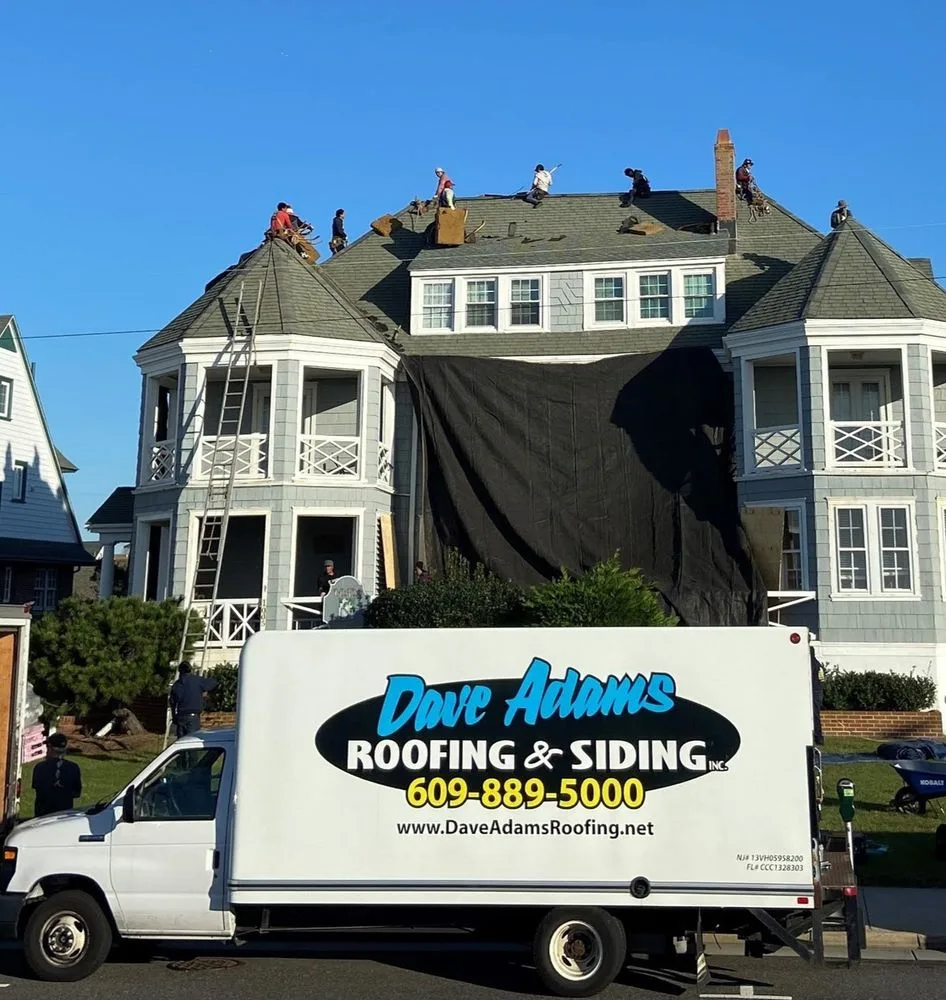
Keep the design simple: your name, what you do, a phone number and your website, readable from across the street. Dave Adams Roofing & Siding's branded trucks are a good example; its Google profile produced 258 calls from May to September 2026, up 12.2%, with an average map rank of 1.57.
12. Try direct mail with a clear reason to call
Direct mail can work for roofers when it's targeted: older neighborhoods with roofs near the end of their life, areas hit by a recent storm, or the streets around current jobs. USPS Every Door Direct Mail makes route-based mailing simple.
Give a clear, honest reason to call: a free inspection if you really offer one, a seasonal check, financing availability or a local project nearby. Use a tracked phone number or a short URL so you can measure results. Test small before you mail a whole county. Compare the calls from a test mailing with the cost of the printing and postage, and only scale up the routes that brought signed jobs.
13. Show up in the community
Sponsor a youth team, help with a charity build, join the local chamber of commerce or host a roof-safety talk. These rarely bring leads directly, but they make your name familiar and often earn local links and mentions that help your Google rankings and AI visibility.
14. Get recommended by AI search
Homeowners are starting to ask ChatGPT, Perplexity and Google's AI Overviews to recommend roofers. These tools draw on websites, reviews, directories and mentions on other sites. The same work that helps on Google helps here: clear pages that answer questions directly, consistent business details everywhere, strong reviews and real local mentions.
Pineapple Roofing's AI visibility score, from a tool that measures how often AI answers mention a business, went from 0 to 20. It's an early metric, but it shows AI visibility can be measured and moved. Our AI search guide explains the approach.
15. Offer and market financing
A roof replacement is one of the bigger purchases a homeowner makes, often unplanned. Offering financing through a lending partner can turn "we'll wait" into a signed job. Mention it on your website, in estimates and on the call, and make sure any advertised terms meet your lender's and the law's requirements.
16. Claim your other listings: Bing, Apple and directories
Google gets most local searches, but not all. Apple Maps powers searches on iPhones through Siri and Apple Maps, and Bing's results feed other assistants and search tools. Both have free business listings: Apple Business Connect and Bing Places for Business. Claim them, match your Google details exactly and add photos.
Then check the main directories homeowners and search engines use: the Better Business Bureau, Angi, Houzz, Yelp, Nextdoor, your local chamber and your manufacturers' contractor finders if you hold a certification. Consistent name, address and phone across all of them helps Google trust your business details. Inconsistent ones, often left over from an old address or phone number, can quietly hold back your map rankings.
17. Answer every call, fast
This isn't a marketing idea in the usual sense, but it decides whether all the others pay off. Homeowners call several roofers. The first one to answer, sound competent and book an inspection usually gets the job.
- Answer live during business hours, even when everyone is on roofs. Use an answering service or office staff.
- Text back missed calls within minutes.
- Call web form leads within the hour.
- Use a simple script: what's going on, address, roof age, timing, who decides. Then book.
- Record calls and listen to a sample every week.
Local Services Ads also reward responsiveness, so a missed call can cost you future ad visibility as well as the job.
18. Use email and text for follow-up, not blasts
Most homeowners don't want a roofing newsletter. They do respond to useful, well-timed messages: a confirmation with the inspector's name and photo, a reminder the day before, a follow-up after the estimate, a thank-you after the job with a review link, and a seasonal check-in once or twice a year.
Set these up once in your CRM or scheduling software and they run on every job. They make you look organized, they close more estimates and they bring back past customers. Get permission before texting, include an easy way to opt out, and keep every message short and specific to that customer.
How should a roofing company market after a storm?
Fast, honestly and within your state's rules. After hail or high wind, homeowners search for inspections and repairs, and storm chasers flood in. The local roofer who shows up first with a clear, trustworthy message wins.
- Update your Google profile with a post about storm inspections and current response times.
- Raise ad budgets for storm and repair searches in the affected area, and add negative keywords for places you can't reach.
- Message past customers in the affected area, offering to check their roofs.
- Put your storm page front and center on the website, with what to do first and how inspections work.
- Staff the phones and extend hours. Missed calls in a storm week are the most expensive ones you'll have.
- Canvass carefully, if you do it: permits where needed, uniforms and ID, no pressure, and the FTC's Cooling-Off Rule respected.
Avoid language your state restricts. In Florida, statute 489.147 bans offering gifts or incentives for an inspection or a claim and bans interpreting insurance policies without a public adjuster license, with fines up to $10,000 per violation. Even where it's legal, "free roof" promises make careful homeowners trust you less.
What marketing should a new roofing company do first?
Get found, get reviewed and get referrals. A new company has no rankings and few reviews, so start with what builds both:
- A complete Google Business Profile at a real address, with photos from your first jobs.
- A fast, simple website with a page for each core service and your main city.
- A review request after every single job from day one.
- Local Services Ads once you can pass verification, for leads while rankings grow.
- Yard signs and neighbor letters around every job.
- Two or three referral partners, like a realtor and a home inspector.
Tony Munoz said on video that working with us was Martin Home Exteriors' first marketing investment. Starting with the profile and reviews gave him a base to grow from.
Which roofing marketing ideas fit your company's size?
Smaller companies should focus on owned, low-cost ideas that compound. Larger and multi-location companies can add paid channels and more locations once the basics are in place. Here's a rough way to think about it.
| Stage | Focus first | Add next |
|---|---|---|
| New or one crew | Google profile, reviews, neighbor marketing, referrals | Local Services Ads, core service pages |
| Established, one office | Map grid rankings, service and city pages, LSA, Search ads | Video, direct mail, partner program |
| Several crews, growing | Call handling, tracking by source, ads by service line | A second real location, commercial pages |
| Multi-location | A profile, page and review flow for every location | Brand campaigns, community sponsorships, AI search |
Whatever your size, the order matters. Paid ads sent to a weak website with a thin Google profile waste money. Fix the foundation first, then add speed with ads.
Do manufacturer certifications help roofing marketing?
They can. Shingle and roofing manufacturers run contractor programs that come with stronger warranty options, listings in their contractor finders and badges you can use in marketing. Homeowners recognize the big brands, so a real certification adds trust on your website, estimates and trucks.
Only display certifications you actually hold, use the program's name and logo as the manufacturer allows, and keep them current. Listing a certification you've lost or never earned is the kind of thing a competitor or a homeowner will notice, and it can break the program's rules. Mention the warranty options the certification unlocks, in plain language, on your replacement page and in estimates.
What roofing marketing should you do each season?
Match your marketing to when homeowners worry about their roofs. The exact calendar depends on your region: Florida and Gulf Coast roofers plan around hurricane season, while northern roofers plan around snow, ice and spring storms.
| Season | Focus |
|---|---|
| Late winter | Plan the year, fix the website and Google profiles, line up crews, contact old estimates |
| Spring | Pre-storm inspections, ramp up ads, neighbor marketing, review push from early jobs |
| Summer | Peak ads and phone coverage, storm response, video and photos from jobs |
| Fall | "Before winter" messaging, past-customer outreach, finish the year's reviews |
| Winter | Emergency repairs, ice dams in the north, content and page building, partner meetings |
Keep SEO and reviews running all year. They build slowly, and the companies that keep at them through slow months have bigger busy seasons.
What marketing works for multi-location roofing companies?
Each real location needs its own Google Business Profile, its own location page, local reviews and local photos. Expanding into a new city without those usually brings few calls at first.
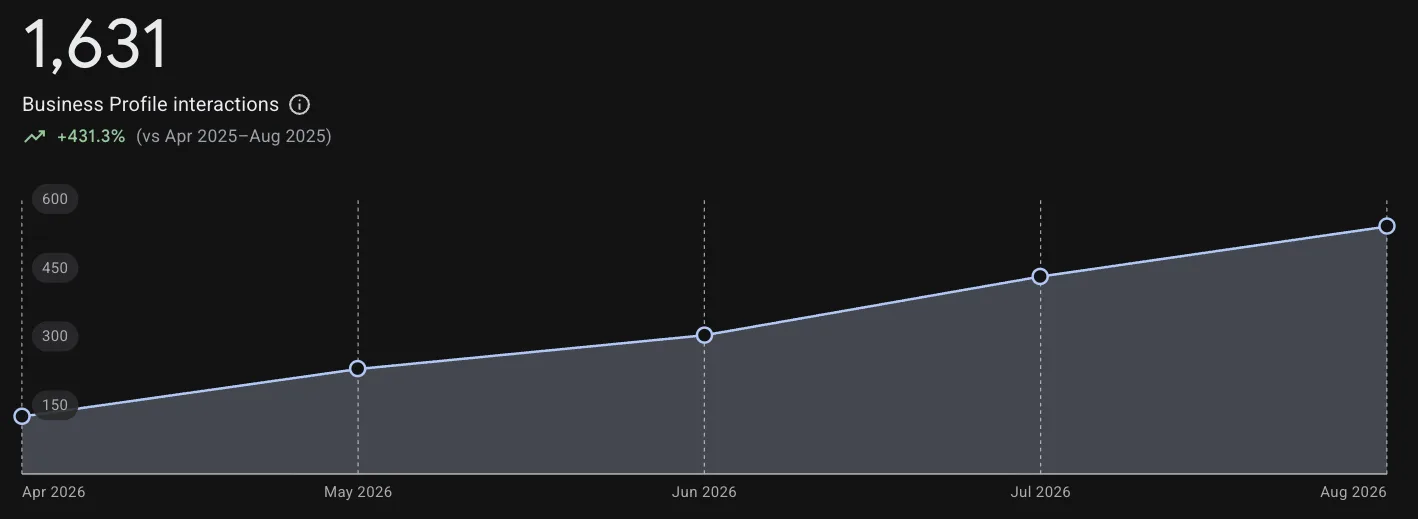
Our multi-location clients show how new profiles start slowly. Original Roofing Co.'s Rochester Hills profile produced 167 calls from June to September 2026 and Grand Rapids produced 72, while its newer Inverness, Illinois profile produced 10. All-Side Roofing & Restoration's Dayton profile produced 141 calls from May to September 2026, Huber Heights 30, and the new Middletown profile 2. Surge Exteriors' Quincy and Macomb, Illinois profiles averaged ranks of 2.21 and 3.17, and its profile interactions rose 431% to 1,631.
Plan for that ramp. Give each new location real reviews, photos and a strong page from day one, and expect months before it matches the established office.
Why do most roofing marketing ideas fail?
Usually because the idea works and the system behind it leaks. A good campaign brings calls, then nobody answers at 6 p.m., estimates go out without follow-up, and the lead source isn't recorded, so the owner decides the idea didn't work.
- Missed calls. A homeowner with a leak calls the next roofer on the list. Answer live, or call back within minutes.
- No follow-up on estimates. Many replacements are decided after the second or third contact, not the first.
- No source tracking. If you can't tell which idea brought a signed job, you'll cut the wrong one.
- Too many ideas at once. Start two, measure them for a season, then add the next.
- Storm-only marketing. Companies that market only after storms are invisible the rest of the year; the steady work from the map and referrals is what carries the slow months.
Fix those five before you add a new idea, and the ideas you already have will look a lot better. Our roofing lead generation guide covers call handling and follow-up in detail, and how to choose a roofing marketing agency covers what to expect if you hand the work to someone else.
Which roofing marketing ideas should you avoid?
Anything that risks your Google profile, breaks consumer protection rules or brings leads you can't close.
- Fake addresses or virtual offices for Google profiles. They get suspended.
- Keyword-stuffed business names on Google, like "Best Roofer [City] Roof Repair." Google can suspend profiles for this.
- Buying or faking reviews, or paying for positive ones. The FTC can fine for it.
- Pressure tactics at the door. Homeowners are warned about them, and the FTC's Cooling-Off Rule gives buyers three days to cancel many door-to-door sales.
- Insurance promises like "free roof" or "we'll handle your claim" where state law restricts them.
- Copy-paste city pages by the hundred.
- Chasing every shiny tactic while the basics go undone.
If your Google profile has already been suspended, our guide on fixing a suspended Google Business Profile applies to roofers too.
How do you know which roofing marketing ideas work?
Track every lead from its source to a signed job, then compare cost per signed job by source every month. Without that, you're guessing.
- Pick your top ideas. Choose three to five ideas from the list above that fit your market and budget.
- Set up tracking. Use call tracking, form tracking and source fields in your CRM so every lead carries its source.
- Run them consistently. Give each idea at least a few months; SEO and Maps need longer.
- Compare cost per signed job. Monthly, compare spend and time against signed jobs by source.
- Double down and drop. Put more into what works and cut what doesn't.
For the full plan, read our roofing marketing guide. For a source-by-source comparison of leads, see roofing lead generation. And to see how these ideas played out for real companies, read our roofing case studies.
One last point: consistency beats creativity. The roofers in our results deck with the strongest numbers didn't find a secret tactic. They kept their Google profiles active, asked every customer for a review, answered the phone and kept improving their pages month after month.
FAQ
What is the most effective marketing for roofers?
For most residential roofers, ranking the Google Business Profile in the map pack, backed by a steady review system and strong service and city pages. Local Services Ads and Search ads add calls faster.
How can a roofing company get more customers without spending a lot?
Optimize your Google Business Profile, ask every customer for a review, contact past customers and old estimates, put signs in yards and market to neighbors around each job.
Does direct mail work for roofers?
It can when it's targeted at older neighborhoods, storm-hit areas or streets around current jobs, with an honest reason to call and a tracked number to measure it.
Should roofers use social media?
Yes, mainly for proof and remarketing. Homeowners check your pages to see that you're real and active. Social rarely brings as many direct leads as Google.
Which roofing marketing tactics backfire?
Fake addresses on Google, keyword-stuffed business names, fake or paid reviews, high-pressure door tactics, insurance promises your state restricts and copy-paste city pages.
What's a sensible marketing budget for a roofing company?
It depends on your market, growth goals and how much of your work already comes from referrals. Set a budget you can sustain, track cost per signed job by source and move money to what works.
How do I market a new roofing company?
Start with a complete Google Business Profile at a real address, a fast website with service pages, reviews from every early customer, Local Services Ads once verified, and neighbor marketing around each job.
Do yard signs still work for roofing companies?
Yes. A clear sign on a job neighbors are already watching is one of the cheapest ways to reach homeowners with roofs of the same age.